


Radiation Oncology
• Side effects of radiotherapy are usually temporary and vary depending on the area of the body being treated.
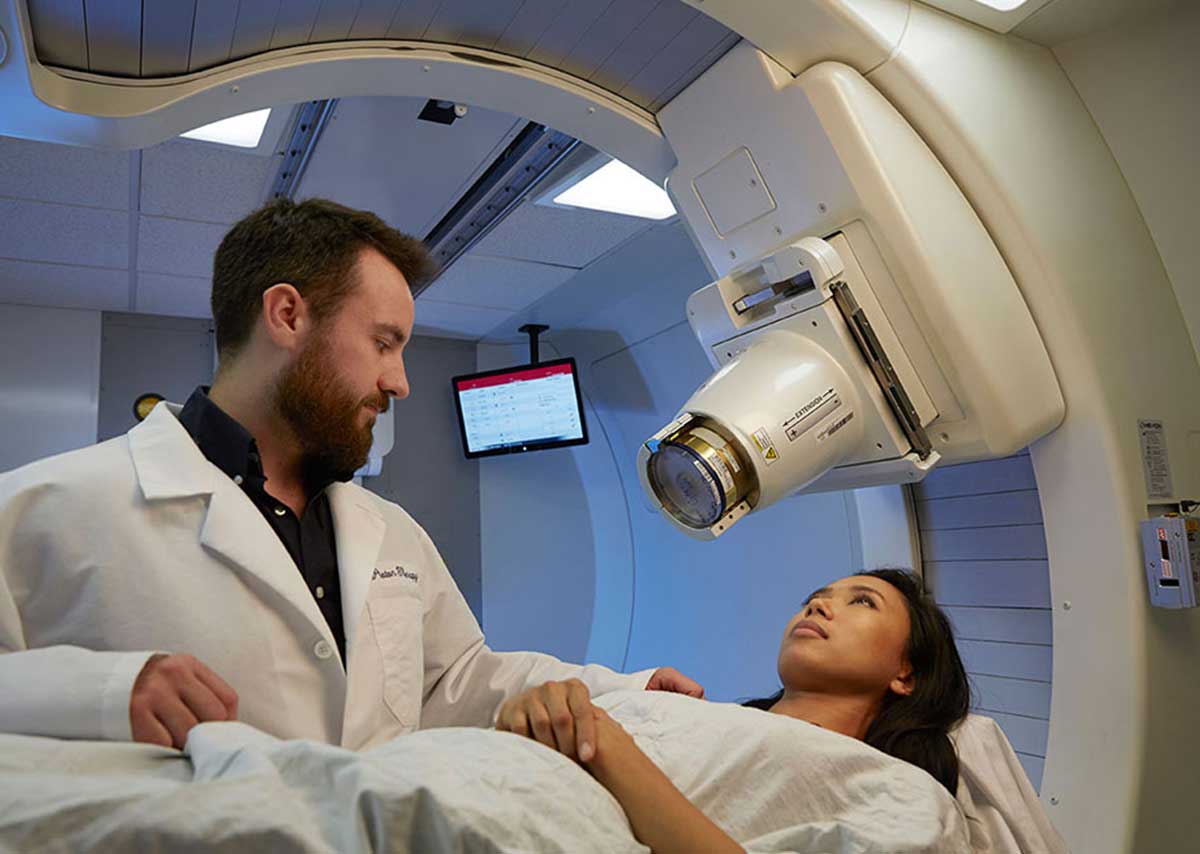
In the Radiation Oncology department, ionizing radiation is used to control malignant cells as a part of cancer treatment. In order to transmit the radiation to the diseased organ in the most accurate and appropriate way, devices such as the Linear Accelerator called TrueBeam, developed for this purpose, are needed. The use of high-dose radiation with the use of these devices, mostly for the purpose of destroying cancerous tissue or providing palliation, is called "radiotherapy" or "radiation therapy".
In our Radiation Oncology department; Radiation oncologist, medical physicist, radiotherapy technician, nurse, dosimetrist, psychologist, social worker, dietitian, radiation protection specialist and patient consultants provide service. In addition, the most basic steps in guiding the treatment, such as investigating the extent and staging of the tumor after evaluation, are solved with a multidisciplinary approach, together with clinics such as Nuclear Medicine, Radiology, and Pathology.