


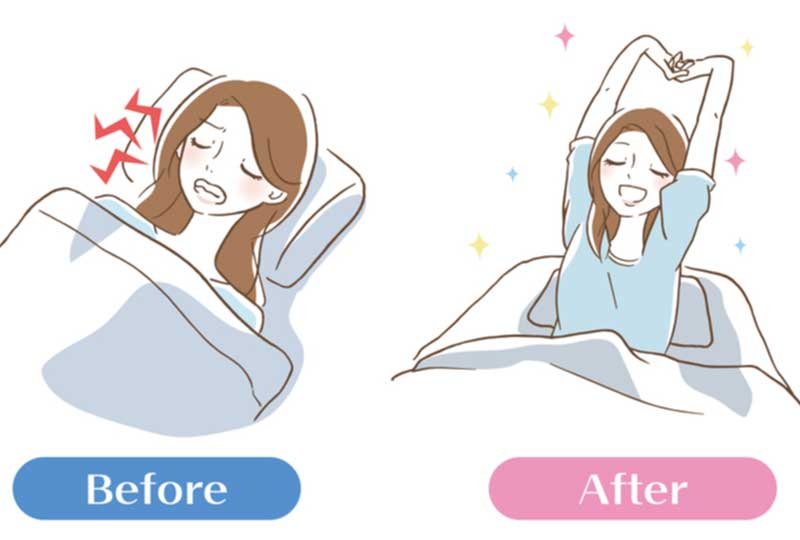
Teeth Grinding
Bruxism is the behavior of involuntarily clenching or grinding the teeth for a long time during the day. This condition usually increases during sleep and its intensity may vary depending on the stress situation. The severity of the disease increases with the strengthening of the chewing muscle.
What symptoms can be observed in patients with bruxism?
Pain may occur over the chewing muscle in the cheek and at the level of the jaw joint. Pain; It can also be observed in the temples, neck and shoulders in the future. It is usually severe in the morning hours. There may also be pain in mouth opening and closing movements and a clicking sound in the joints. Rocking, abrasions and fractures can be seen in the teeth. Tooth sensitivity may develop due to these conditions.
What are the treatment options for bruxism?
In order to relax the chewing muscle and eliminate complaints, protective plates can be prepared or botox can be applied to the chewing muscle. If bruxism is caused by unwanted contact of the teeth, the process should be supported by appropriate dental treatments. Depending on the level of discomfort, muscle relaxants or psychotherapy may be necessary. In advanced diseases, it may be necessary to wash the inside of the joint.